

Narcissist vs. Psychopath: Key Differences in Motivation and Behavior


Introduction
When you’re dealing with someone who seems perpetually self-centered or emotionally cold, your first instinct might be to label them a “narcissist” or a “psychopath.” While these terms are often thrown around interchangeably in casual conversation, they describe fundamentally different internal engines. Understanding the distinction isn’t just an academic exercise; it is a practical tool for navigating relationships, workplace politics, and personal boundaries. Recognizing whether you are dealing with a need for constant validation or a calculated lack of conscience can change how you protect your own emotional well-being.
The Core Drivers: Why They Act the Way They Do

The most significant difference between a narcissist and a psychopath is their underlying motivation. While both personality types can lack empathy and use manipulation to get what they want, the “why” behind their behavior is distinct (1, 2).
The Narcissist: Driven by Validation
A narcissist is primarily motivated by a need for admiration and the maintenance of an inflated self-image. Their sense of self is often described as “fragile” or “unstable” (1, 2). Because their self-worth is so precarious, they require a constant stream of “narcissistic supply”—praise, attention, or even fear—to keep their ego from collapsing. They are deeply invested in how others perceive them, even if that perception is based on a false persona.
The Psychopath: Driven by Gratification
In contrast, a person with psychopathic traits is often more cold and calculating. Rather than seeking applause, they are driven by self-gratification, personal gain, or sometimes simply to alleviate boredom (1, 2). Unlike the narcissist, a psychopath tends to have a more stable, consistently grandiose self-image that does not rely on the approval of others to exist (1, 2). They don’t need you to tell them they are great; they simply act as if they are, and they move on once they have achieved their goal.
At a Glance: Key Behavioral Contrasts
To help recognize these patterns in real-world social or professional settings, consider the following comparison:
| Feature | Narcissistic Traits | Psychopathic Traits |
|---|---|---|
| Primary Need | Admiration and external validation 1. | Self-gratification and practical goals 1. |
| Self-Image | Fragile, fluctuates between grandiosity and vulnerability 1. | Stable, consistently grandiose 1. |
| Reaction to Criticism | May lash out or experience intense emotional distress (1, 2). | Often indifferent, unless social approval serves a practical benefit (1, 2). |
| Redirects conversations to themselves to seek attention 1. | Mirrors others’ beliefs as a tool for manipulation 1. | |
| Possesses emotions but uses them to protect the ego 1. | Often lacks a fixed identity; may “fake” emotions to manipulate 1. |
How to Spot These Traits in Real Life

Because these behaviors aren’t always obvious, looking for specific patterns of interaction can provide clarity. Note that these are behavioral observations, not clinical diagnoses.
Signs of Narcissistic Patterns
- The Conversation Hijack: You notice that no matter the topic, the individual finds a way to bring the focus back to their own achievements, problems, or importance.
- Ego Sensitivity: They react with disproportionate anger or “narcissistic rage” when they feel slighted, ignored, or criticized.
- The Need for an Audience: They seem to perform their life rather than live it, constantly seeking external proof of their status or beauty.
Signs of Psychopathic Patterns
- Calculated Mimicry: They may appear to be “the perfect friend” or “the perfect partner” initially, but you realize they are simply mirroring your values and emotions to gain your trust 1.
- Lack of Remorse: A defining characteristic is a lack of conscience; they may lie, cheat, or break rules without any visible signs of guilt or emotional weight 1.
- High-Stakes Manipulation: They often operate with a level of confidence and zero regard for social rules, treating social environments like a chessboard 1.
Clearing Up Common Misconceptions
Pop culture often creates a skewed view of these personality types. It is helpful to separate myth from reality to avoid misidentifying people in your life.
Myth: Psychopaths are inherently violent.
While popular media equates psychopathy with serial killers, many individuals with psychopathic traits may never physically harm anyone. However, they can still cause significant emotional and financial harm through manipulation and exploitation 1.
Myth: Sadism is a requirement for psychopathy.
There is a nuance here: while some individuals may enjoy the pain of others (sadism), researchers argue that while sadism can correlate with psychopathy, it is a distinct trait and not a defining requirement for the condition 1.
Myth: They are completely separate categories.
In psychology, there is an ongoing debate regarding the “Dark Triad”—narcissism, psychopathy, and Machiavellianism. Some researchers suggest these might not be three distinct entities, but rather different features of a single “dark monad” centered on psychopathy 1.
People Also Ask
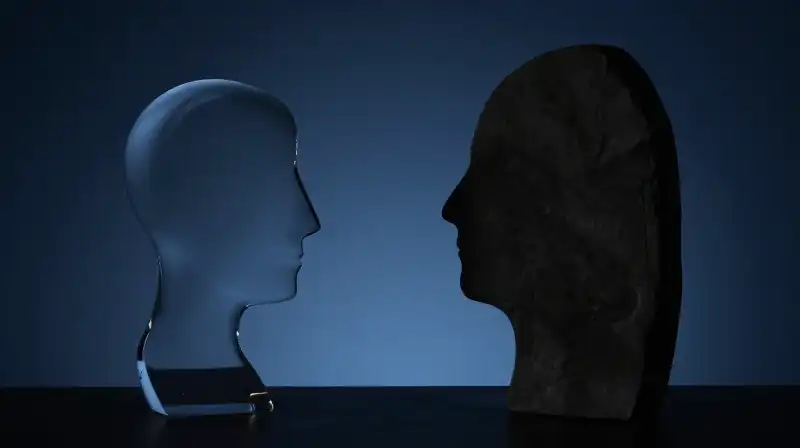
Who would win, a psychopath or a narcissist?
This question often arises when people imagine a conflict between these two types. Because a narcissist is driven by an emotional need for validation and a fragile ego, they can be more easily “triggered” or provoked. A psychopath, being more cold and goal-oriented, is often more calculated and less likely to be swayed by emotional outbursts. In a strategic sense, the psychopath’s lack of emotional volatility often gives them a practical advantage in a conflict of wits.
Moving Forward: What to Watch For
Whether you are navigating a difficult boss, a volatile partner, or a questionable friend, the goal is not to play psychologist, but to recognize patterns of relational aggression and sabotage 1.
If you find yourself constantly walking on eggshells to avoid someone’s rage, you may be dealing with narcissistic dynamics. If you find that someone’s “personality” seems to shift entirely depending on who they are trying to impress, you may be encountering psychopathic mirroring. Recognizing these differences allows you to stop asking “Why are they doing this to me?” and start asking “How do I protect myself from this pattern?”
Disclaimer: This article is for informational purposes and describes personality traits and patterns. It is not a substitute for professional psychological diagnosis or mental health support.
References
Footnotes
Frequently Asked Questions
Who would win, a psychopath or a narcissist?
In a strategic conflict of wits, a psychopath may have a practical advantage because they are more calculated and less likely to be swayed by emotional outbursts. In contrast, a narcissists fragile ego and need for validation make them more easily triggered or provoked.
Related Articles